
AI for Good: Cross-sector analysis

Context
We’re at an inflection point in artificial intelligence – presenting both tremendous potential opportunity and risk for people in low- and middle-income countries (LMICs). We’re launching an organization to scale AI-enabled big bets that improve the lives of tens to hundreds of millions in the Global South.
We aim to identify and scale multiple “Big Bets” - evidence-backed interventions with the potential to reach tens of millions of people within the next five years. This Cross-Sector Analysis, drafted earlier this year through desk research, is a snapshot of the initial, desk-review stage of that search. The report highlights two things:
High-potential big bets, grouped by their potential for impact and readiness for scale
Investments and partnerships needed to unlock or accelerate them - from model validation in LMIC contexts, to policy changes, to data infrastructure
This work is early-stage, and will quickly become dated - but consistent with our focus on building the broader AI for Good sector, we are eager to share learnings as they become available. As we’ve done deeper analysis on opportunities, we’ve already seen meaningful changes in our perspective - we expect this will continue. We hope publishing this helps funders, policymakers, and other implementers assess opportunities, pressure-test our thinking, and further conversation and learning in the sector.
Current advisors include Nobel Laureate Michael Kremer; Dario Amodei, CEO of Anthropic; and Kent Walker, President, Global Affairs for Alphabet and Google. This work is made possible through the support of the Ezrah Charitable Trust and two anonymous donors.
Learn more about our approach here. For questions, added detail on this work, or feedback, please reach out to Kanika, Katie, Tessa, or Simon.
Table of Contents
A. Executive Summary
We’re at an inflection point in global development and AI – the next five years may have an outsized effect on the next century of impact.
Today’s AI applications predominantly focus on advanced economies. Access and applications in LMICs have been largely neglected. Exciting work is happening to develop LMIC-focused interventions, but it’s often in pilot stage, and more resources are needed to bring this work to scale.
Leveraging AI, low & middle-income countries could “leapfrog” traditional stages of development and drive massive efficiencies. Mobile money in Kenya demonstrates this power: M-Pesa leveraged high mobile phone penetration to offer a new model for banking access, increasing financial inclusion for 30M+ people. Today, 80% of Kenyans use mobile money.
Conversely, without active support to drive responsible, effective AI adoption, developing economies may lag further, driving vast inequality increases. Today, government preparation is nascent: South & Central Asia and Sub-Saharan Africa rank last in a government AI readiness index. While there is exciting momentum through new initiatives such as Cassava Technologies or the IndiaAI Mission, talent, compute access, quality datasets, & data centers remain concentrated in high-income countries.
AI presents an opportunity to drive step-change impact across key social sectors in low & middle-income countries (LMICs)
Downstream Agriculture
The problem: There are 475 million small-scale farmers globally, 64% of whom live on less than $1500 annually. These farmers face increasingly complex decisions amid climate variability, severe weather, and market shocks, yet have limited access to information and support (LMICs often have just 1 extension agent per 1K+ farmers).
AI opportunity: AI tools can help farmers increase their crop yields amidst increasingly complex environmental changes, generating billions of dollars of income and mitigating the downside risk of crop loss. Specifically, AI stands to improve weather forecasting in LMICs, improving accuracy and avoiding the need for computationally-intensive infrastructure that traditional forecasts require. AI also reduces the cost of reaching farmers at scale compared to traditional extension programs, and is able to synthesize vast, complex agricultural datasets to deliver personalized, actionable, and accurate advice to millions of smallholder farmers.
Downstream Health
The problem: LMICs face enormous gaps in healthcare access and quality. Over half the global population is not fully covered by essential health services, and 60% of deaths in LMICs from conditions requiring health care occur due to poor quality care.
AI opportunity: AI can meaningfully increase the standard of physical and mental health treatment in LMICs by improving both diagnostics and treatment quality and democratizing access to care. It’s estimated that high-quality health systems could prevent 2.5M deaths from cardiovascular disease, 900K deaths from tuberculosis, 1M newborn deaths, and 50% of maternal deaths annually.
Education
The problem: LMICs have made major progress in improving school enrollment in the last two decades, but learning levels remain low – 617M students fail to meet minimum proficiency levels in reading & math, 70% of 10 year olds in LMICs were unable to understand a simple written text in 2022, and teachers are stretched thin with large classes, limited training, and infrastructure gaps.
AI opportunity: AI could reduce systems-level educational attainment gaps by cost-effectively scaling highly evidence-backed tactics to millions of classrooms – including personalized learning, well-structured lesson plans, and frequent feedback. The implications of how AI-driven shifts in the labor market could affect education–from optimal education curricula to the fundamental link between enhanced education and improved incomes–remain unclear and require further consideration.
Humanitarian response
The problem: ~30% of the global population lacks early-warning coverage for severe weather, leading to widespread, preventable loss of life and assets. First responders often have to “fly blind” to get aid and resources to people impacted by disasters, due in large part to poor baseline maps of core infrastructure like roads, and siloed data collection systems as disasters evolve.
AI opportunity: AI stands to improve the speed, accuracy, and scale of humanitarian response, potentially saving millions of lives and billions of dollars in assets. AI can improve lead-times for severe weather prediction and equip humanitarian response teams with better information – including AI-created damage assessments, maps of core infrastructure, or identification of hotspots based on news & social media analysis.
Global Health R&D
The problem: Traditional drug development requires 12-15 years, costs ~$2.8 billion per approved drug, and the clinical trial success rate is only 7.9%. Diseases of poverty (including Neglected Tropical Diseases) affect over 1 billion people, yet new therapies are highly underinvested in due to the high costs of development and patient populations’ low purchasing power.
AI opportunity: By accelerating the identification and commercialization of novel and repurposed treatments for diseases of poverty, AI holds the potential to avert millions of disability adjusted life years for LMIC populations. AI is already beginning to transform Health R&D across the value chain by analyzing large datasets to understand disease biology and identify target drug candidates, improving predictive analytics to reduce late-stage failures, and transforming clinical trials infrastructure–from patient recruitment to reducing or eliminating reliance on animal trials.
Agriculture R&D
The problem: Our global food system faces major threats that necessitate transformational R&D. By 2050, it’s estimated that global food production will need to increase by 26-100% to feed a growing population. The severe weather that is increasingly threatening crop yields has an outsized impact on smallholder farmers who lack high-quality inputs and access to insurance.
AI opportunity: AI could accelerate transformative R&D breakthroughs, driving a step-change increase in global food production by creating clonal hybrid seeds, enhancing plants’ photosynthetic efficiency, creating heat and drought-resistant seeds, and tackling climate change through innovations such as methane vaccines for livestock.
Measurement & Evaluation
The problem: Traditional program evaluations are expensive, resource-intensive, and take meaningful time to complete. As a result, the feedback loop between implementation and evidence is long, programs are adapted or scaled slowly, and valuable opportunities for optimization are missed.
AI opportunity: AI could unlock cheaper, faster, and more adaptable measurement & evaluation approaches than traditional systems, offering more frequent and deeper insights, enabling governments and NGOs to adjust, optimize, or scale their programs more rapidly. AI could also enable new types of data collection at scale, such as (i) large-scale qualitative data collection and (ii) open-ended responses, allowing recipients to share unprompted feedback – something rarely practical with traditional surveys. This could increase the depth and quality of the data collected.
We’re launching an organization with the mission of driving AI readiness in LMICs, scaling AI-enabled big bets that improve the lives of tens or hundreds of millions in LMICs.
We’re incubating a project at Evidence Action to identify AI-enabled, evidence-backed ideas that jump progress curves forward in time, with the potential to meaningfully improve the lives of 10s or 100s of millions of people in the coming decade.
We’ve drawn on leading expertise across key sectoral areas (agriculture, education, health), economics, technology, and government to inform this phase of the roadmap. Formal project advisors include Nobel Laureate Michael Kremer; Dario Amodei, CEO of Anthropic; and Kent Walker, President, Global Affairs for Alphabet and Google.
We need to start scaling high-impact ideas now: We’ve identified tractable, high-impact big bets with potential to scale to tens of millions of people.
There isn’t time to wait: at the speed of AI’s progress, we must act now to ensure LMICs unlock AI’s transformational potential, or risk further growing the global inequality gap. This urgency demands bold, scaled action, developing programs designed from the start to reach tens of millions of people.
We’ve identified a number of potential ‘big bets’ across sectors that appear ready for deployment in the next five years. To be considered a ‘big bet,’ an idea needs to be:
Scalable – Improves the lives of tens of millions or hundreds of millions of people
Unlocked by AI – AI unlocks the ability to reach millions of people who would otherwise be unreachable, or meaningfully improves the impact per person of already scalable interventions
Cost-effective – Evidence supports the big bet’s impact and its cost-effectiveness
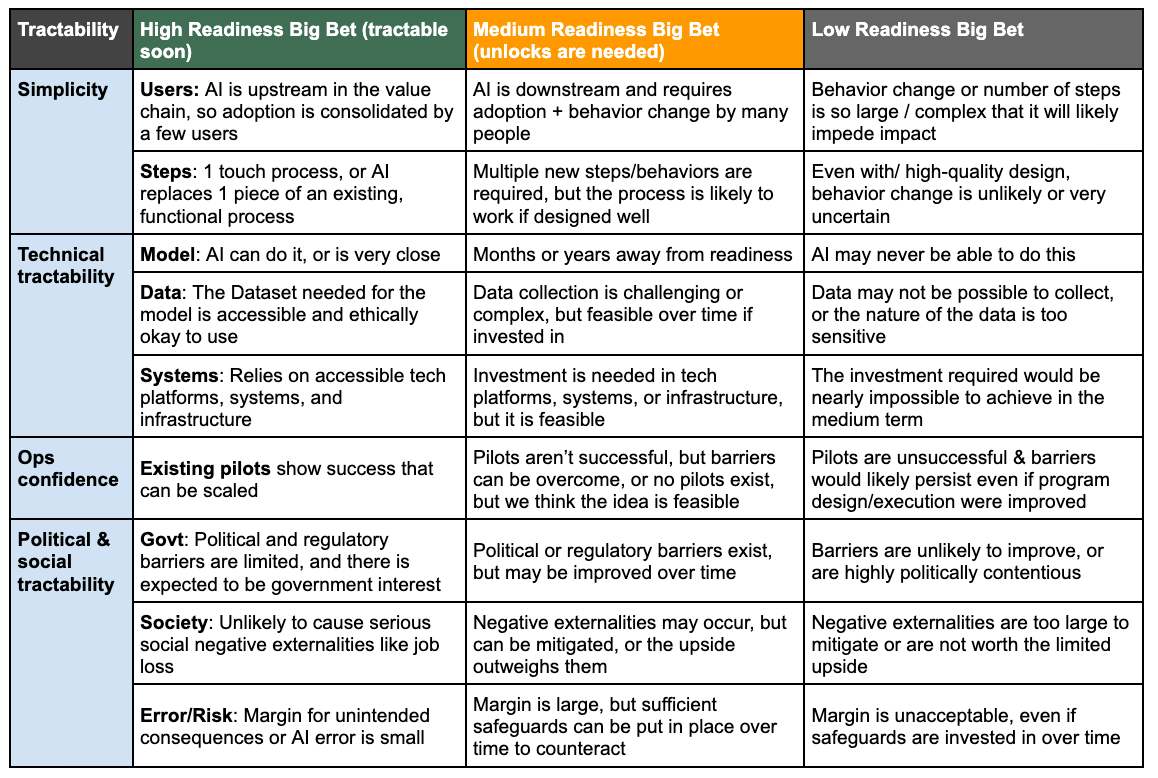
Tractable – Demonstrates scale readiness in the near- or medium-term, including on the dimensions of technical readiness, government interest, and ability to sufficiently mitigate risks
While many of these may currently face barriers to scale, we believe readiness timelines can be accelerated with targeted investments and resourcing. A key piece of this analysis involved identifying where those barriers to scale are likely to exist, to proactively understand feasibility and identify potential mitigants.
Our full evaluation criteria can be found in the Appendix.
Downstream Agriculture Big Bets:
High Readiness: Two high-potential big bets appear ready for near-term deployment in LMICs: AI-driven weather forecasting tailored to smallholder farmers and AI-created agricultural advice, such as using LLMs to synthesize existing agricultural datasets and to translate forecasts into usable recommendations. We estimate that AI-generated weather forecasts could be delivered to tens of millions of farmers at extremely low marginal cost, with the potential to generate billions in economic gains.
Medium Readiness: We also see high potential to stack advanced AI farmer advisory services onto weather forecast dissemination, such as soil sensor irrigation guidance & AI pest detection for crops. A number of investments could accelerate timelines to deploying these advanced farmer advisory services at scale, including developing LLM chatbots for local languages, developing & deploying robust internet-of-things hardware (like soil sensors), and building / coordinating datasets for model training, including region-specific pest and historical yield data.
Downstream Health Big Bets:
High Readiness: AI models show high accuracy in diagnosing medical images/scans (like chest X-rays for Tuberculosis) and are already being scaled in LMICs – but broader access to digital diagnostic hardware, like portable X-ray machines, is needed.
Medium Readiness: AI for frontline healthcare, via clinical decision support or direct-to-patient chatbots, could help fill the expected global shortfall of 10M health workers by rapidly upskilling LMIC medical workers, and predictive AI models could help identify emerging disease hotspots/outbreaks at scale. To accelerate product readiness timelines, investments are needed in benchmarking and validating AI model-use cases for LMIC populations and disease contexts–most model testing has been in high-income countries, whose disease burdens, population demographics, and digital infrastructure differ from those of LMICs. Investments in building AI-created Electronic Health Records (EHR) infrastructure could also unlock more complex, systems-wide transformations like AI-based disease outbreak prediction based on analysis of EHRs plus available datasets like satellite images. AI can also extend mental health support to the 85% of people with mental disorders who today receive no treatment at all. Rules-based chatbots that deliver evidence-backed interventions like Cognitive Behavioral Therapy appear ready for near-term deployment, while generative AI therapists that provide more holistic, open-ended support still carry risks and require further validation.
Education Big Bets:
High Readiness: AI 1:1 tutoring appears ready for scale, with randomized control trials in LMICs showing 1-2 years of schooling gains in just a few months of use. We estimate that putting 1 million “personalized teachers” into the hands of students could generate $500M+ in lifetime earnings and drive reductions to system-level educational attainment gaps. However, successfully scaling will require widespread availability of smartphones/tablets in schools, close engagement with political stakeholders and teacher unions, and consideration of the effects of AI-driven shifts in the labor market on education curricula and education-driven income potential.
Medium Readiness: AI could provide automated, high-quality feedback for students on their work, driving large improvements in the quality and personalization of education in LMICs. However, most LMIC classrooms rely on paper-based work, and AI computer vision drops in accuracy with local languages and untidy or cursive script; handwritten math symbol recognition is still on the cutting edge of technical development. Technical investments to improve AI recognition of handwritten text and math symbols could accelerate timelines for transformational impact in LMICs.
Humanitarian Response Big Bets:
High Readiness: Upstream applications of AI, including AI weather forecasts for early-warning weather systems, show high near-term potential for driving impact at scale. It’s estimated that spending $800M on early warning systems in LMICs would avoid losses of $3-16BN annually.
Medium Readiness: AI applications can improve the effectiveness and efficiency of humanitarian responses, including pre-disaster mapping of unmapped areas, post-disaster damage assessments, and natural language processing (NLP) analysis of news and social media to identify areas with high concentrations of distress signals. These tools require integration with robust humanitarian response systems to be effective, and require strong data protection standards to ensure surveillance tools are used for intended humanitarian purposes. This idea could be a High Readiness big bet, pending analysis on where humanitarian systems are ready for AI integration.
Measurement & Evaluation Big Bets:
Medium Readiness: Automated M&E systems for NGOs and governments have strong potential for AI-powered automation - they predominantly rely on technology that already exists, and AI could dramatically lower costs and increase quality of evaluations. That said, there is no market failure to address here, and our sense is that private incentives might drive this technology forward. Data collection networks to track outcomes in high-poverty regions also show promise, but further evidence is needed on assessing phone-based data collection using AI.
We are now evaluating high-priority ideas in more detail before conducting operational scoping for the top ideas surfaced (including identifying potential regions or countries for implementation). We are fast-tracking AI big bets in downstream agriculture and health for deep dive evaluation, including AI weather forecasting for smallholder farmers, AI digital farmer advisory services, and AI-enabled tools for last-mile health delivery due to their high impact potential and potential readiness for scale.
AI applications to Health & Agriculture R&D face complex challenges, but offer high rewards: Getting this right could drive transformational impact for billions of people, but will require very large investments, risk capital, & coordinated action.
Health R&D Big Bets: Significant investments are likely needed to enable successful AI-enabled R&D for diseases of poverty. This includes building and coordinating the disease and patient datasets that AI needs to be effective (potentially including LMIC biobanks and often siloed or sparse disease datasets), developing clinical trials infrastructure in LMICs, and creating the market-shaping investments needed to drive financing and demand for new treatments. These investments are significant and complex, but getting them right could help transform the lives of over a billion people.
Agriculture R&D Big Bets: Commercializing breakthroughs in Agricultural R&D faces relatively long timelines (likely 10+ years). Structural challenges also pose barriers to last-mile adoption of novel agriculture technologies, including widespread anti-GMO regulations in LMICs, potential farmer distrust for new products, and financial access barriers. More analysis is needed to understand whether and how coordinated action could unlock barriers at scale.
Some interventions evaluated are categorized as Low Readiness Big Bets by our core criteria - typically, these face increased barriers to implement or scale, don’t currently have a sufficient evidence base, or don’t have a clear enough AI unlock.
Some of these interventions could be considered a high or medium readiness “big bet” under our criteria pending regulatory changes or advancements of evidence bases. Others may make sense for other organizations to prioritize driving forward, or may not be high enough impact to justify investment.
Government partnerships are a high-potential path to scaling AI across sectors:
Through proactive policy and regulatory changes, countries have the opportunity to both mitigate AI’s downside risk while maximizing opportunities for potential “leapfrogging.” We see high potential in working closely with governments to support their national AI readiness through technical assistance.
This work may include partnering with governments to accelerate the development of AI-enabled tools for high-impact use cases, defining a national AI strategy across sectors, or supporting on-the-ground, last-mile deployment of AI applications to end-users. It may also involve working with governments on AI initiatives in sectors that didn’t meet our bar for direct implementation work (given their more indirect impact on people living in poverty), including AI applications to Labor Markets, Economic Growth, and Government transformation. As we move into the next phase of analysis, we are exploring a model for what this could look like.
The rest of this document gives further details on AI applications in each sector.
This includes where we see the strongest potential high and medium readiness opportunities, as well as where we anticipate key barriers that will require investment and resourcing to unlock potential at scale.
This assessment was written largely based on desk research across sectors during summer 2025. We expect that with deep dives on particular interventions, assessments may meaningfully change. This is a point-in-time analysis that - given the speed of AI’s progress - will likely soon be out of date, but we believe there is value in sharing to foster further conversations in the sector.
As we move forward in selecting priority interventions, we will likely introduce additional criteria to narrow our decision.
B. Sector Summaries
Downstream Agriculture & Climate
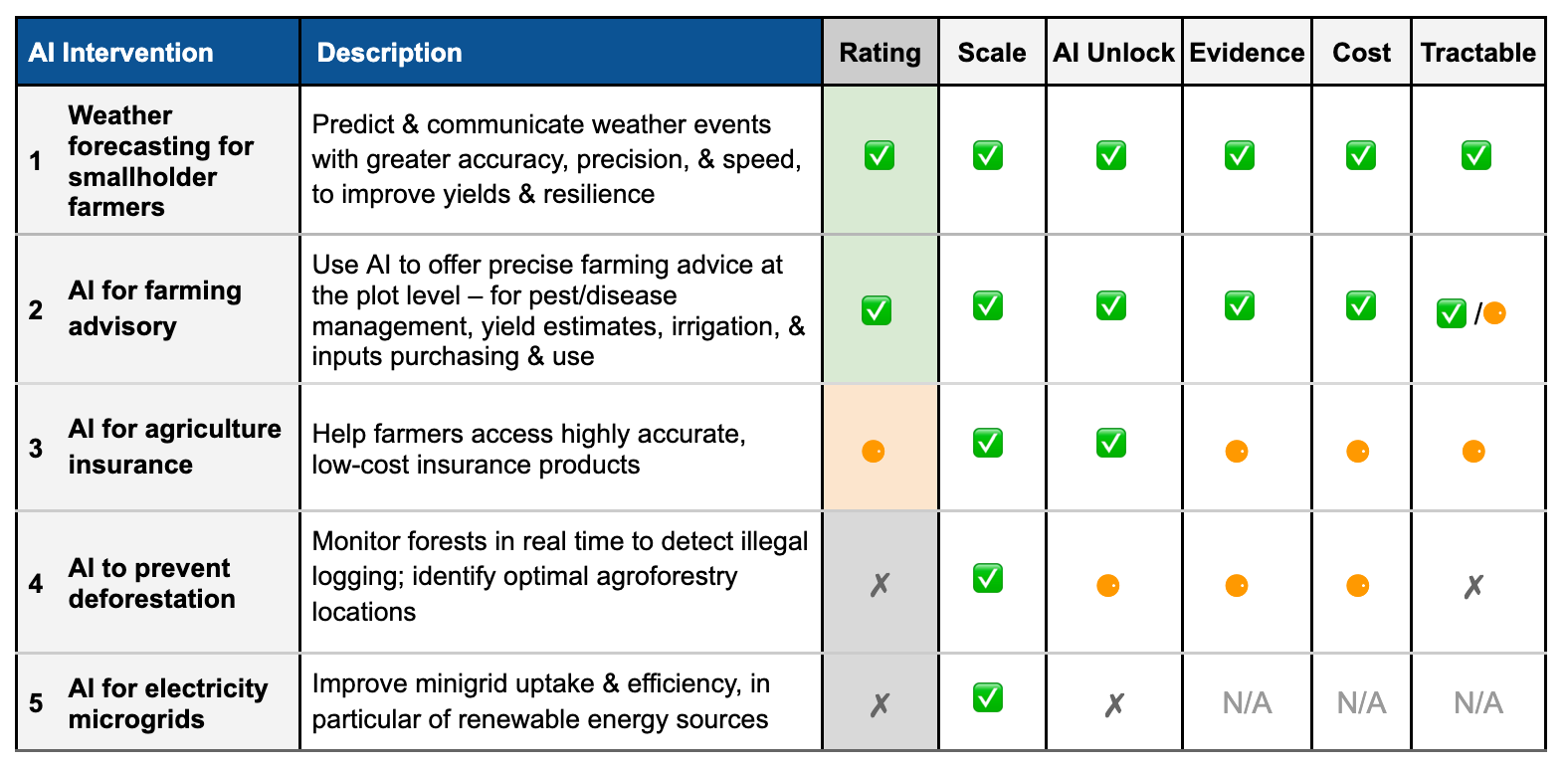
Big Bet Readiness: ✅ High | 🟠 Medium | ✖️Low
Key Takeaways
Problem: There are 475 million small-scale farmers globally, 64% of whom live on less than $1500 annually. Smallholder farmers are facing increasingly complex decisions amid climate variability, severe weather events, market shocks, and soil degradation, yet have limited access to agriculture advice and support (LMICs often have just 1 extension agent per 1,000+ farmers, for example). Insurance utilization also remains extremely limited, with many farmers choosing to mitigate risk by planting highly stable crops despite their lower yields.
Weather forecasting for smallholder farmers appears particularly impactful and tractable, with potential to be delivered to tens of millions of farmers at extremely low marginal cost, with potential to generate billions in economic gains - and is a ✅ High Readiness Big Bet. We plan to fast-track our deep dive analysis of this idea, given its high potential
Impactful: Early evidence indicates that AI models can provide greater accuracy than traditional regional models run in LMICs, offer more precise forecasts, and unlock new types of forecasts, like seasonal and sub-seasonal predictions. There is also strong evidence that farmers are willing to change their behavior in response to forecasts.
Cost-Effective: Once the upfront tech is created and implemented, the marginal costs of scaling this product are low (a few cents per SMS message), with a high expected cost-to-benefit ratio at scale.
Tractable: Pilots are already beginning to demonstrate tractability and early successes.
We see high potential in layering digital farmer advisory services onto weather forecasting over time, also a ✅ High Readiness Big Bet. A range of AI-enabled farmer advisory products exist, some of which are relatively tractable in the near term (including using AI to synthesize the vast literature that exists on agriculture best practices and turn it into effective messaging for farmers), and others that will take time to build towards (like irrigation guidance based on soil sensors, weather data, and satellite imagery analysis), which may require investments in gathering datasets and developing and deploying internet-of-things hardware.
AI for Agriculture insurance is a 🟠 Medium Readiness Big Bet - it appears to have high potential, but faces significant barriers to success, including financial sustainability (it likely requires major subsidies), challenges around tying weather events to crop yields/losses, and paths to regulatory approval (insurance is a highly regulated industry, and ML algorithms for insurance are new territory). This may hold potential as an “add-on” service to be bundled into a weather forecasting/agricultural advisory platform down the line, as the tech and regulatory landscape matures.
AI for preventing deforestation has strong technical potential, but it is a ✖️Low Readiness Big Bet as its impact depends on strong enforcement capacity, political will, and community engagement. It is worth continuing to monitor, however, especially as the EU’s Deforestation Regulation takes effect, potentially shifting market incentives for deforestation.
AI for Electricity Minigrids are also considered a ✖️Low Readiness Big Bet: AI does not currently appear to offer significant improvements to minigrid efficiency and scalability, and the costs and data demands of AI likely outweigh any benefits.
A note on Climate Shortlisting: We sourced several climate ideas in the following areas, but decided to deprioritize them, given that all had more indirect impact on people living in poverty:
Manufacturing & transportation: AI applications primarily focus on making manufacturing systems more efficient (energy optimization across processes, smart building management, industrial robotics and automation, intelligent manufacturing systems, and predictive maintenance). These ideas are hard to pull apart from manufacturers’ investments in efficient systems for cost savings/profit growth. It’s therefore likely not the right space for this AI for Good Project, given that our focus is on solutions that more directly impact people living in poverty.
Building management: The building sector is a key contributor to climate change, and a number of AI applications exist for reducing the sector’s carbon footprint, such as optimized design & planning for low-cost, energy-efficient housing, AI-driven material selection, and AI-improved cooling technology. Similar to manufacturing and transport, however, these ideas likely do not directly scale to people living in poverty relative to ideas in other sectors.
Carbon sequestration: While carbon sequestration will have a large, indirect impact on people living in poverty, we are prioritizing ideas with a more direct impact on LMICs specifically.
Downstream Health
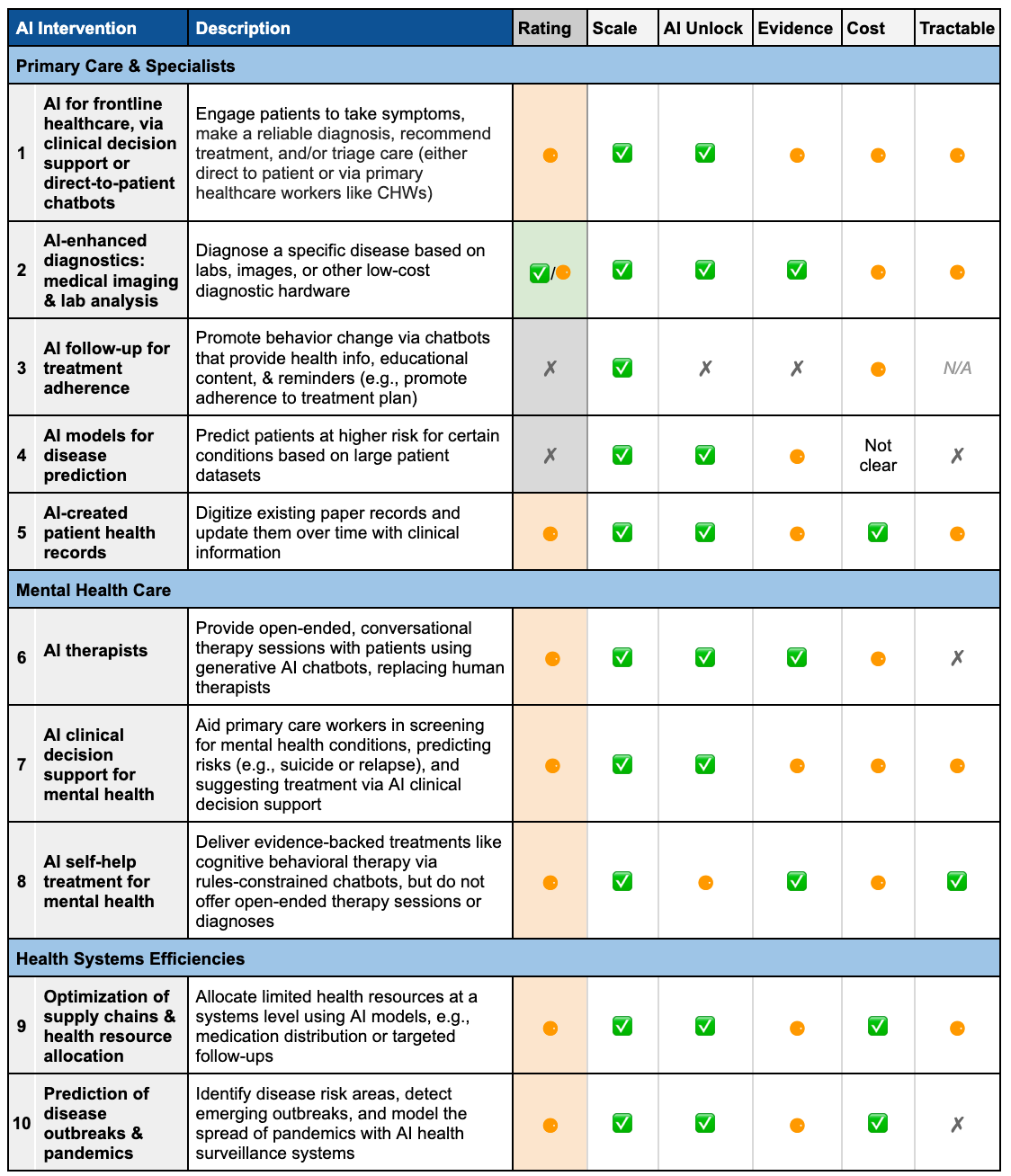
Big Bet Readiness: ✅ High | 🟠 Medium | ✖️ Low
Key Takeaways
The Problem: People living in LMICs face enormous gaps in healthcare access and quality. Over half the global population (about 4.5 billion people) was not fully covered by essential health services as of 2021, and there is expected to be a global shortfall of 10 million health workers by 2030, predominantly in LMICs. Moreover, 60% of deaths in LMICs from conditions requiring health care occur due to poor quality care, and inadequate care quality results in $1.4-1.6 trillion in lost productivity in LMICs annually.
AI could, in theory, extend high-quality healthcare access to hundreds of millions of people by equipping millions of community health workers to provide reliable diagnoses and treatments, or directly providing access to a digital “AI doctor.”
In the near-term to medium-term, we see particularly high potential in:
AI for frontline healthcare, via clinical decision support or direct-to-patient chatbots: AI solutions offer to help fill enormous access and quality gaps in healthcare by enabling frontline healthcare workers with minimal training to offer high-quality care, optimizing referrals and triage so patients reach the right levels of care, and reducing the time it takes patients to seek appropriate care by making health information more accessible (e.g., via AI-enabled symptom checking and appointment scheduling support).
AI for Tuberculosis medical imaging/screening: ~10.6M people develop tuberculosis each year, but ~3.1M cases go undiagnosed, largely due to diagnostic gaps and people not seeking care. There is a strong evidence base supporting the reliability and accuracy of Computer Aided Detection (CAD) of chest X-rays for TB, and this intervention has reached significant scale after over a decade of coordinated investment and regulatory approvals. This application has relatively high marginal costs, however, given the need for portable, digital X-ray machines.
AI for mental health: Fully generative AI therapists are likely too risky to be deployed directly to patients at this stage, but there is potential for more rules-constrained AI chatbots to help fill the massive gap in mental health services in LMICs. However, more evaluation is needed as to whether the AI unlock is significant enough here, compared to basic, rules-based chatbots that follow a specific script.
Models are becoming more capable, but require investments in clinical validation prior to scaling in LMICs. There is promising evidence supporting AI’s ability to accurately diagnose common conditions, but most results come from simulations (e.g., Google’s AMIE, MayaMD) or small pilots (e.g., Mediktor, Ada in South Africa, Baidu in China). While the technology appears promising, more evidence is needed on how to most effectively integrate it into clinical settings in LMICs, including in the many contexts that have limited digital infrastructure (such as unreliable internet connectivity). This evidence base is beginning to be built, but requires further investment. For example, a recent randomized-controlled trial from Penda Health offers a strong proof point that AI clinical decision support can improve diagnosis and treatment rates within a primary care setting in Kenya, and additional studies are underway in Rwanda and Nigeria.
AI-created Electronic Health Records (EHRs) may not be transformational on their own, but could generate the datasets needed to drive more complex AI applications like disease prediction & monitoring: AI models can create EHRs based on speech-to-text transcription, ambient listening, and/or structuring of free-form text from clinical notes. This data could make complex, systems-wide AI applications feasible, such as models that identify disease hotspots based on EHR + satellite data, or supply chain optimizations that automatically trigger resources for clinics based on diagnosis rates.
Education
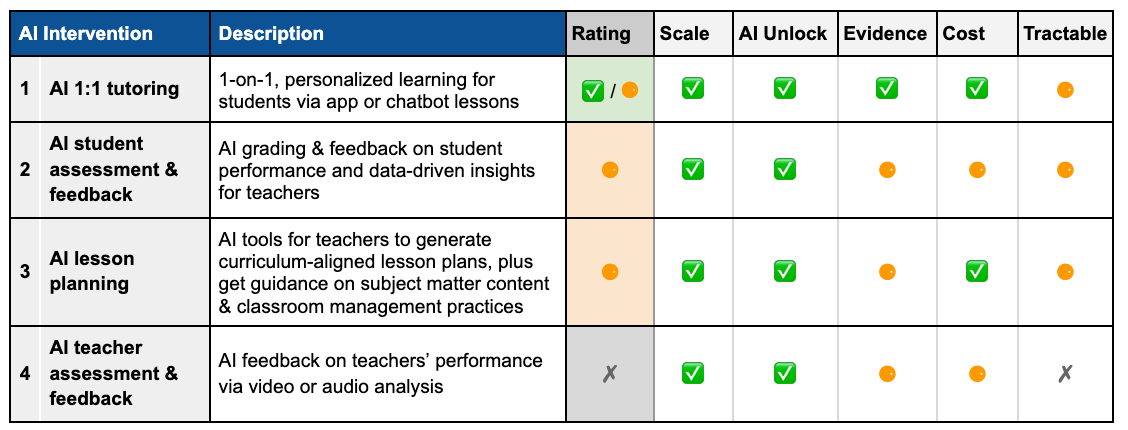
Big Bet Readiness: ✅ High | 🟠 Medium | ✖️Low
Key Takeaways
Education in LMICs faces big challenges & opportunities for improvement: LMICs have made major progress in improving school enrollment in the last two decades, but learning levels remain low: 617M students fail to meet minimum proficiency levels in reading & math, 70% of 10-year-olds in LMICs were unable to understand a simple written text in 2022. Teachers are stretched thin and face several structural challenges, like large classes, limited training, and infrastructure gaps.
There are highly evidence-backed solutions for how to improve educational outcomes in LMICs, but they are often resource-intensive and hard to scale. AI could potentially scale various components of these programs to millions of classrooms–
Teaching at the Right Level is an approach that groups students by learning levels (instead of age) to help them master foundational skills before advancing. AI 1:1 tutoring & AI Student Assessment & Feedback tools can provide aspects of TaRL (like adaptive learning) at scale.
Structured pedagogy programs provide high-quality lesson plans, teacher training, and ongoing feedback & coaching to teachers to improve teaching quality. AI can help scale lesson planning & coaching support to millions of teachers for relatively low cost.
RCTs have already evaluated some of these AI-driven tools in practice, making this sector’s AI maturity relatively advanced – AI 1:1 tutoring RCTs in Ghana and Nigeria found improvements of 1 - 2 years of schooling after a few months of use; an RCT in Brazil found AI feedback increased essay scores by 0.09 SD across 19K students, and an RCT of an AI teaching assistant in Sierra Leone found a subset of teachers used the system frequently.
More research is needed on how important a coordinated set of interventions is, and if addressing components piecemeal (e.g., providing AI lesson plans without training and follow-up coaching) would significantly diminish impact, compared to holistic programs.
These ideas also face varying levels of tractability in terms of being ready to deploy at scale, with many requiring wide deployment of smartphones and major changes to how teachers run classrooms. Ensuring that teachers’ unions are bought in on ideas and supported by new technology will also be an important enabler of scale, requiring thoughtful co-design & oversight.
Agriculture R&D
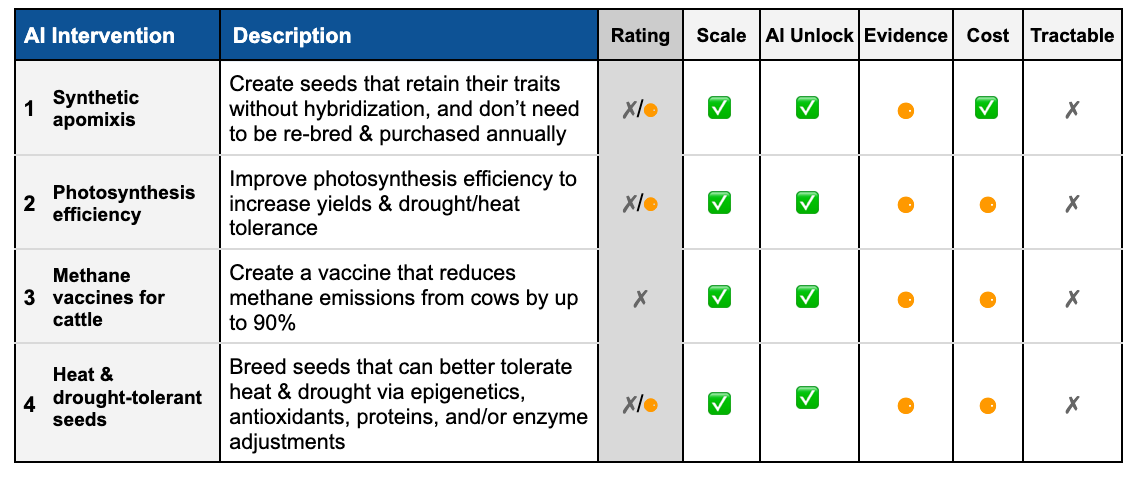
Big Bet Readiness: ✅ High | 🟠 Medium | ✖️ Low
Key Takeaways
We are facing major threats to our global agriculture system, necessitating transformational R&D investments. These threats include:
Food shortages: By 2050, it’s estimated that we will need to increase global food production by 26 - 100% to feed a growing population
Climate change threats: Severe weather, including droughts and heatwaves, is threatening crop yields globally and will have an outsized impact on smallholder farmers who lack high-quality inputs and access to insurance. Global agriculture is also a key contributor to climate change – animal agriculture, in particular, generates over 14.5% of global greenhouse gas emissions.
However, tractability barriers make this sector a likely ✖️Low Readiness Big Bet for our primary strategy, unless we are open to an R&D portfolio approach –
Most research is still in early stages, with relatively long timelines to commercialization and uncertainty around which R&D projects will ultimately prove most viable in real-world trials. Most research is either at the modeling stage or is in small-scale field trials. We are likely 5 - 15 years away from outcomes that are ready to commercialize.
There may be structural barriers to getting this tech into the hands of LMIC farmers, which may require meaningful investment and coordination to overcome. For example:
GMO regulations: Many countries in Africa & Asia severely limit the use of GMO crops, which some of these interventions will likely be classed as.
Farmer demand: There is evidence that many smallholder farmers don’t or can’t adopt new agricultural products like new hybrid seeds, either for financial or trust reasons.
IP / Licensing: The large-scale field trials needed to validate new agriculture products cost millions, so researchers often partner with big seed companies to run them in exchange for access to IP/licensing. If these agreements do not have provisions for making the technology financially accessible, the tech may fail to gain traction in LMICs. It’s unclear which actors are best positioned to ensure widespread LMIC access.
Simpler solutions exist which may improve outcomes in the near-term: While there is a global need to increase crop stability & yields, there may be simpler solutions to target for LMIC smallholder farmers in the near and medium term. For example, only 10% of farmers in SSA have access to existing, high-quality seeds from major seed companies.
In the next stage, we should validate the feasibility of unlocking these structural barriers and what role a coordinating player could have. We plan to deprioritize deep dives on individual research projects until we’ve answered the macro questions. For example, a coordinating player might:
Fund a portfolio of high-potential research: Small-scale field trials by academic institutions cost ~$300K to test one idea in one type of plant. Just $10M may be able to fund ~30 early field trials to increase the speed of high-potential research.
Coordinate IP / Licensing agreements to ensure that, before large-scale field trials, provisions are made to ensure LMIC access to new technologies.
Coordinate advanced purchasing commitments: Investigate opportunities to apply advanced commitments to seed purchasing in LMICs, similar to drug purchasing agreements.
Solve barriers to farmer uptake: Partner with existing last-mile delivery players to improve uptake likelihood & delivery channels for new agricultural tech, before this new R&D hits the market.
Government advocacy for GMOs: Work with governments on regulatory frameworks amenable to new technology.
Specific findings on Agriculture R&D interventions:
Synthetic apomixis would make clonal seed production possible for high-quality hybrid seeds, so that farmers do not have to purchase new hybrids each year (often a prohibitive cost for smallholder farmers). This would have an enormous direct impact on smallholder farmers in LMICs by drastically reducing the cost of accessing high-quality seeds, but it also may be furthest from commercialization, and faces high regulatory barriers given the GMO nature of the technology.
Improving plants’ photosynthetic efficiency to improve agricultural productivity is likely the closest to commercialization (potentially within 5 years), with significant philanthropic and academic investments already made to advance the R&D. But regulatory and last-mile barriers are a concern, including supply chains, affordable pricing, and promoting smallholder farmer trust and uptake.
Methane vaccines for cows to reduce their methane output have the most indirect impact for LMIC farmers, as the goal is to reduce global climate change. There is also a risk that it doesn’t come to fruition, given that it is a novel type of vaccine. However, it appears underfunded given the opportunity size (since methane is a public goods issue), and the regulatory and tractability barriers are likely lower than for GMO seeds, given the application is to livestock.
Breeding of hybrid heat & drought-tolerant seeds faces similar last-mile barriers as photosynthetic efficiency, with financial subsidies and quality extension services likely needed to drive uptake. The regulatory barriers may be lower, however, as AI could be used to improve the throughput of hybrid breeding processes without transgenically modifying crops, thereby avoiding GMO barriers.
Global Health R&D
Big Bet Readiness: ✅ High | 🟠 Medium | ✖️Low
Key Takeaways
Traditional drug development requires 12-15 years and can cost around $2.8 billion per approved drug, and the overall success rate of clinical trials is only 7.9%. Novel therapies for neglected diseases are highly under-invested in relative to the number of people they impact, given the high costs and long development timelines, plus patient populations’ limited purchasing power.
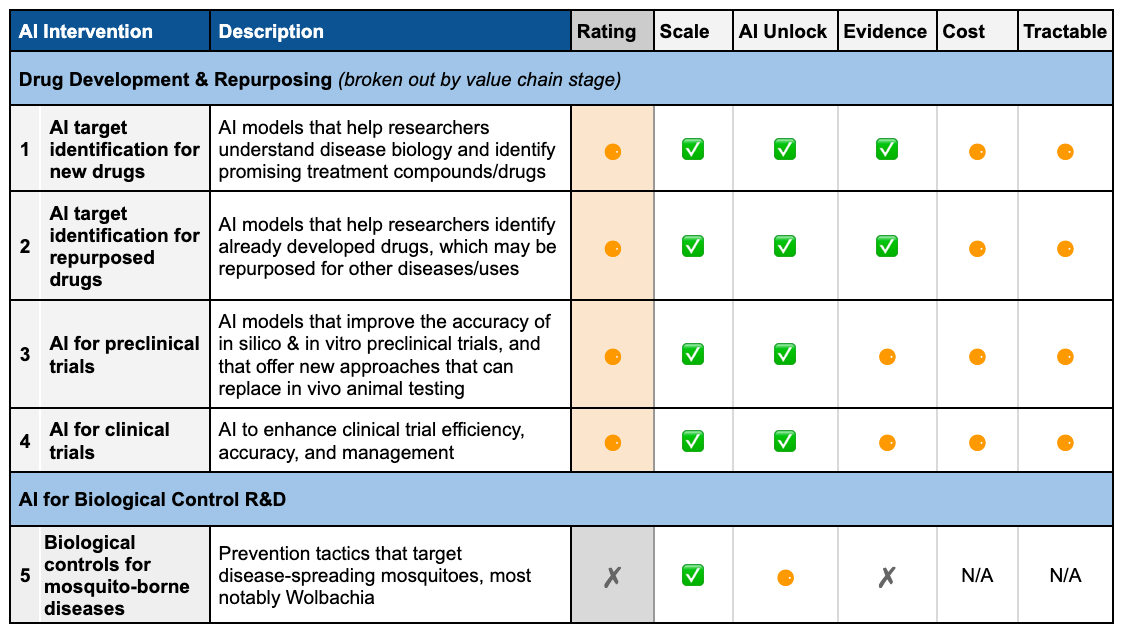
AI stands to transform R&D across each stage of the value chain, but it’s not clear how tractable the applications are to diseases of poverty (including Neglected Tropical Diseases, HIV, Tuberculosis, and Malaria) in the near term, making each stage a 🟠 Medium Readiness Big Bet
Discovery & Targeting: AI is beginning to transform this stage, but applications to diseases of poverty may be limited in the near term due to dataset limitations and the complexity of pathogenic Neglected Tropical Diseases (NTDs).
The opportunity (in theory) is high: AI can analyze large biomedical datasets & scientific literature to understand disease biology & identify target drug candidates. In theory, AI can also identify issues early via predictive modeling, reducing late-stage failure rates.
Identifying target candidates for drug repurposing holds particular promise as a more cost-effective approach vs. new drug development.
There is some early evidence that this approach can work: ML models have suggested approved compounds for leishmaniasis and dengue, and identified new candidate compounds for Chagas disease.
However, in practice, AI-enabled identification of new drug targets appears limited by dataset quality and the complexity of NTD diseases.
Preclinical Development: AI holds potential to transform in vitro and in vivo trials, but many tools require further validation in regulatory contexts and across complex use cases.
AI stands to improve in vitro testing accuracy, e.g., using predictive toxicology models that can identify potential adverse outcomes in vitro, and computer vision models that can extract complex information from high-throughput, in vitro screens.
AI-powered “virtual patients” and Organs-on-chip (OoC) systems have matched or surpassed the accuracy of some animal tests, and the FDA now encourages AI use as a replacement for animal testing.
But AI applications still appear quite nascent, in particular in regards to highly complex diseases with limited data, like pathogenic NTDs.
Clinical testing infrastructure: AI stands to dramatically improve clinical trial efficiency, but the most transformative applications face relatively high data & tech barriers for diseases of poverty:
Patient recruitment: AI can scan patient health records & insurance claims to optimize enrollment criteria and identify patients for clinical trials – but these datasets are often extremely limited in LMICs, making this challenging in the near term.
Synthetic control arms: AI models trained on historical patient data can provide a “digital twin” synthetic control arm to reduce the number of people needed for clinical trials and to give more people the treatment arm – a powerful option when finding patients is challenging. This tech appears nascent, however, and requires large patient historical datasets to be effective.
Protocol optimization: AI can draft protocols upfront & adapt trial design midstream to shorten trial lengths, but this tech appears nascent, with evidence primarily from simulations.
Biomarker identification: AI can analyze large datasets to identify biomarkers across patient populations, which could be used to (i) match patients with therapies likely to work for them, (ii) focus trial monitoring on biomarkers most correlated with successful outcomes, and (iii) adapt trials in real-time based on patient biomarker response. The tech appears at an early stage, though, with most use cases focused on diseases like cancer for which rich data exists on both patient populations (imaging, tissue samples, genomic datasets, etc.) and clinical trial results. This level of data does not exist for LMIC populations & diseases of poverty currently.
One idea to consider further is investing in AI-enabled clinical trials infrastructure in LMICs that “leapfrog” traditional trials. The full suite of AI tools above could be built into a new clinical trials infrastructure from the ground up as they become available, creating an AI-native system. This requires very high levels of upfront funding and coordination, however.
Across the value chain, more information is needed on how coordinated action at this stage can best unlock key barriers to AI-enabled research on diseases of poverty. Questions include –
Where is coordinated action to proactively address key data gaps most feasible, given the historic challenges in this area? For example:
Biobanks: Certain groups are underrepresented in genomic research, limiting research on disease responses in these populations. One of the most trusted and popular genomics data pools is the UK Biobank, for example, but 94% of their data is from caucasians.
Clinical trials data: Only 43% of clinical trials are conducted in LMICs, despite being home to nearly 80% of the global population, creating data representation challenges.
Disease data: Limited availability of data for diseases of poverty (NTDs in particular) may restrict AI applications and disincentivize companies to prioritize them. Tactics like transfer learning and data augmentation may be needed, or investments in the creation of large, annotated datasets.
Data siloes: There may be datasets residing in LMICs that are not globally known. Coordination work may be needed to encourage data sharing and standardization of AI training material – LEAP platform for leishmaniases is an example of this.
Should we temper expectations of finding novel or repurposed treatments using AI, given the complexity of NTDs? Especially given that the majority of NTDs are parasitic, and R&D for parasitic diseases is particularly challenging.
Which actor(s) are best positioned to drive the market-shaping investments needed, like pooled procurement and public-private partnerships? Populations impacted by diseases of poverty have limited or no ability to pay for treatment, so even significant AI-driven R&D cost savings likely won’t make treatments commercially profitable.
What other roles should coordinating actors play now to proactively ensure that diseases of poverty are prioritized within transformational AI Health R&D initiatives?
Humanitarian Response
Big Bet Readiness: ✅ High | 🟠 Medium | ✖️ Low
Key Takeaways
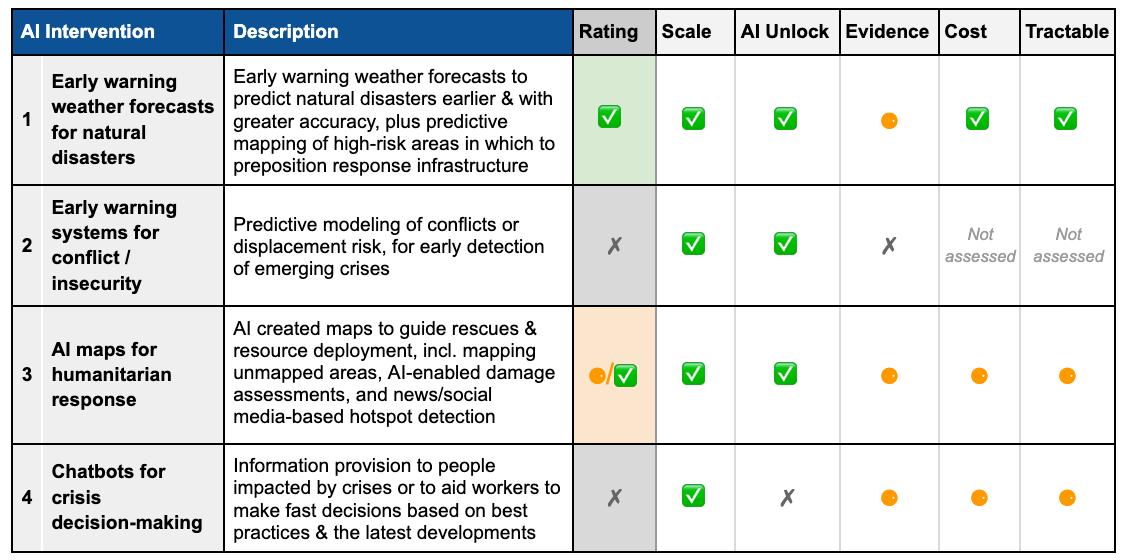
Early warning weather forecasting is a ✅ High Readiness Big Bet:
The Problem: About 30% of the global population lacks early-warning coverage for severe weather events, leading to widespread, preventable loss of life and assets. Many LMICs lack the resources to adapt computationally intensive global forecast models to local contexts and weather conditions.
New, AI-based weather forecasting models can improve accuracy and lead times. For example, traditional flood models may give 1-2 days’ notice, while AI systems are now capable of providing up to 7 days of advance flood warnings.
Reliable, timely, and accurate AI forecasts can improve downstream decision-making. Disaster management is a highly visible and critical government function, and arming public sector actors with better info could support a variety of pre- and post-disaster responses. AI models can also help reduce false alarms and missed events, which may help build trust around calls for evacuations.
But convincing downstream users & public sector organizations to trust forecasts and take recommended actions will be critical. There may be a large need for dissemination, capacity-building, and evidence sharing to encourage take-up of forecasting products and tools across the broad actor landscape. Last-mile delivery is also critical to ensure end-users trust recommendations: Cyclone Idai presents a cautionary example, when many people in rural Mozambique & Zimbabwe didn’t receive early warnings broadcast through inaccessible channels, or did not believe them, contributing to high casualties.
Investing in quality training data and benchmarking for AI models in LMICs will also be critical, and poses some tractability challenges, given that (i) there are many observation-scarce regions in LMICs, and (ii) rare, extreme events pose challenges due to statistical data imbalances.
AI for Conflict & Displacement prediction is also a ✖️Low Readiness Big Bet, as the evidence points to AI only marginally improving conflict & displacement forecast accuracy, not providing a transformational improvement vs. traditional approaches. Predictions also have high political sensitivity, so building sufficient trust to drive action based on AI warnings is likely to be relatively challenging vs. other areas.
AI maps for Humanitarian response are a 🟠 Medium Readiness Big Bet, but could be a ✅ High Readiness Big Bet for acute natural disaster responses in areas with sufficient data & government interest.
Humanitarian first responders often have to “fly blind” to get aid and resources to people impacted by disasters, due to frequent cuts in local communication networks that hamper reporting channels, poor baseline data on core infrastructure like roads, and siloed data collection.
AI stands to improve the speed, accuracy, & scale of humanitarian responses through pre-disaster mapping of unmapped areas, post-disaster damage assessments, and NLP analysis of news and social media to identify areas with high concentrations of distress signals.
This technology is most tractable for acute natural disasters, but is a ✖️ Low Readiness Big Bet for conflict zones, where info may be intentionally manipulated or blocked, and mobilizing action in response to that information may be dangerous and politically complex.
More research is needed on specific data availability by region and level of government interest, the findings of which could push it to be a ✅ High Readiness Big Bet.
Downstream behavior change: These tools must be integrated with robust humanitarian response systems to be effective, so government / scaled NGO interest is key.
Data: Data collection is a major potential barrier to this idea, with questions around how accessible data is, how much standardization will be required across sources, and how feasible on-the-ground data collection is for model training.
“Surveillance humanitarianism” is also a key risk if tools are used for surveillance purposes other than humanitarian response. Robust data protection is critical.
Chatbots for humanitarian response are a ✖️Low Readiness Big Bet due to the high risk impact of delivering incorrect information, limited evidence showing chatbots drive behavior change, and potential access challenges for the most vulnerable people.
Chatbots in humanitarian contexts have high potential, but high stakes. Providing access to credible, timely information could save lives during a crisis by reducing misinformation and improving decision-making. But if models were to hallucinate or make recommendations not well tailored to someone’s context and needs, it could have dire consequences, including loss of life.
Deploying this safely in the near term requires strict guardrails, and it’s not clear how big the benefit is vs. lower tech options. LLMs with strict guardrails may not drive transformational impact compared to lower-tech options like SMS & IVR hotlines, in which people can call or text a number to receive pre-recorded information on the most common queries.
Equipping first responders and call center agents with LLMs is a much lower-risk place to start, as human oversight is built into the operational model. However, it’s not clear how big the unlock of this is, compared to other, more transformative ideas on our list.
Chatbots are being developed by many leading agencies, but more evidence is needed on how much they drive behavior change, especially vs. lower-tech options.
During a crisis, it may be particularly hard for the most vulnerable people to access chatbots, with potential for electricity & mobile connectivity outages, along with baseline low smartphone access. People may also be unlikely to seek out or trust new tech during a crisis.
Measurement and Evaluation
Big Bet Readiness: ✅ High | 🟠 Medium | ✖️ Low
Key Takeaways
The Problem: Program evaluation in LMICs has traditionally relied on specialists to design studies and large teams of enumerators, call center clerks, data managers, and analysts to implement them. This makes evaluations expensive and slow. As a result, poverty and welfare data are often infrequent, outdated, or incomplete, delaying the ability to identify needs, assess effectiveness, and adapt programs. Aid and government initiatives are therefore implemented, optimized, scaled, or discontinued slowly.
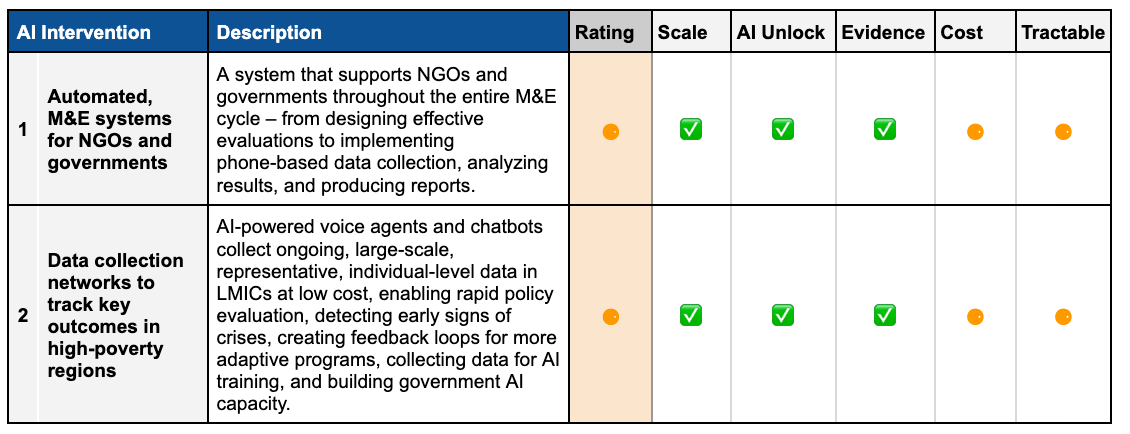
The end-to-end M&E process appears to be a strong candidate for AI-powered automation. Much of the technology already exists: LLMs to advise on evaluation design, AI voice agents and chatbots to collect data through phones in local languages, and AI tools to clean, analyze, and report on findings. Developing an integrated system for implementers to run M&E could dramatically lower the cost and increase the quality of evaluations, allowing for richer data to be collected more often, giving the recipients of aid a greater voice in program design, and bringing about a more informed, efficient, and responsive aid system. However, there’s no clear market failure to address here – private incentives alone might drive this technology forward.
Beyond one-off evaluations, AI could enable the ongoing monitoring of key outcomes from representative samples at a large scale. Most LMICs currently lack timely data on critical indicators. An AI-powered data collection network could run regular, automated phone surveys, producing real-time dashboards for decision-makers and flagging emerging crises. Governments, universities, and NGOs could access this infrastructure for rapid evaluation and hypothesis testing at a fraction of today’s costs. This data could also be an important input into AI models in LMICs, providing training data that is often lacking. However, phone-based data collection using AI is largely untested in high-poverty regions and poses challenges to representativeness, as many of the poorest households lack phone access. Large-scale adoption would require evidence from pilots first.
C. Cross-Sector Hypotheses for the Next Phase of Analysis
In addition to evaluating individual ideas, we’ve identified hypotheses that apply across sectors, which we plan to consider further in the next phase of analysis. These hypotheses are based on a combination of research and the feedback we received on our shortlisting summaries from 20+ advisors.
Product Vision & Roadmap
Think big but start small – stacking products over time: In the next phase, go beyond evaluating individual AI solutions, and identify where the biggest overall opportunity areas are for AI transformation. Build a roadmap that stacks products over time in pursuit of that overall vision, starting with the near-term wins to drive early impact and user adoption.
Prioritize user adoption and behavior change (in addition to long-term impact). Leading indicators are more immediately measurable than multi-year RCTs (important amidst the rapid pace of AI change). If going after the “stackable” product model above, getting users to adopt a new platform is also a key first step to long-term impact.
There will be tradeoffs between breadth and depth: Roadmaps should consider the tradeoffs between maximizing product reach and improving outcomes for a smaller group of users.
Paths to scale / Demand Drivers
Governments are a key path to national scale – it’s especially important to focus on tractability concerns (and potential upsides) to drive demand & scale.
Free, general-use LLMs create competition for consumer market share – alternative demand drivers (like institutions, school systems, governments) may be more tractable, or partnerships with AI labs or social media to deploy services directly on their platforms.
Adapting AI to LMIC contexts
Investments are needed to tailor AI models to LMIC contexts, including gathering high-quality datasets. AI models are highly sensitive to the quality of the data they are trained on, and this can be a concern in LMICs where local datasets are often limited. This is a challenge for most ideas on our list, from local language datasets to train LLMs, to ground-truth weather observations to train AI forecasts, to Neglected Tropical Disease data for AI drug development.
Investment may be needed to benchmark models as they mature: Many new AI models and products are being developed, and LMIC implementers often don’t have a clear way of judging which are accurate and in what contexts they perform well.
Multiple prerequisites are needed for AI to scale, such as hardware and internet access; consideration is needed as to whether investments can be made to unlock any of these barriers at scale, such as advanced market commitments to drive innovation.
Anticipating Risks & Challenges
Identifying risks and responsible AI considerations is crucial at both an intervention (e.g., considering tactics like red teaming, rule-based AI systems, and human oversight) and systems-level (e.g., driving policies to mitigate downside risks related to data privacy, algorithmic bias, job loss, and security risks).
Particular attention is needed to how the environment of declining foreign aid will impact opportunities and needs, especially in regards to the need to drive efficiencies within systems.
D. Appendix – Evaluation Criteria
Step 1: Evaluate each idea against the initial criteria; only assess tractability if the idea passes initial criteria
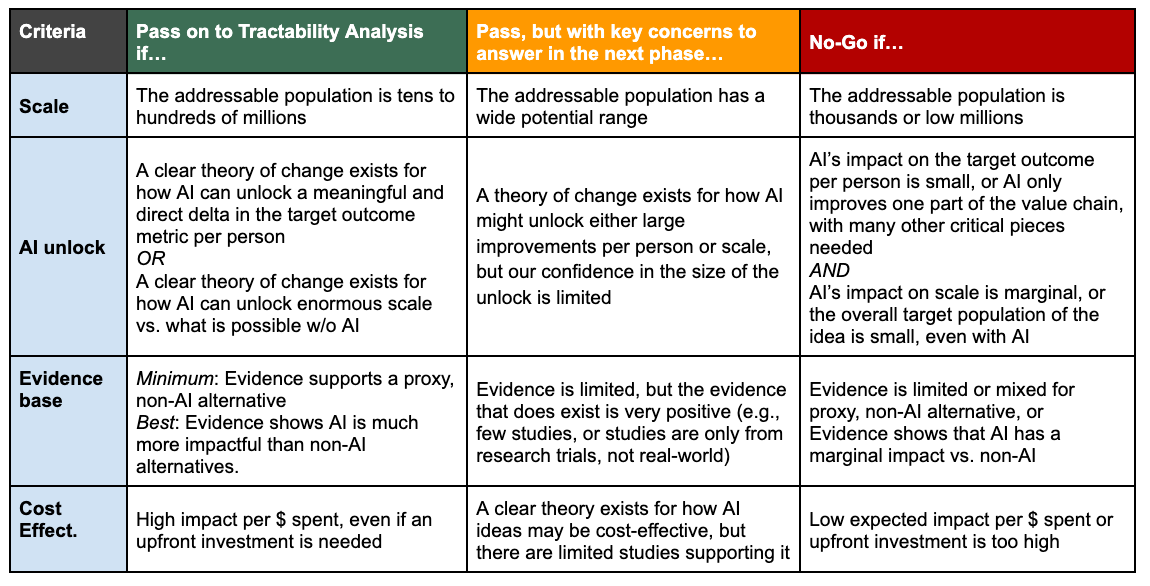
Step 2: Sort ideas into High, Medium, or Low Readiness Big Bets based on tractability
In the global race to scale AI for good, have we paused to define what good truly means when humans operating these systems often lack moral alignment and social honesty? Should the next frontier of AI for development focus not only on technical readiness but on fostering human readiness — empathy, ethical education, and collective integrity — without which even the best tools fail to serve humanity?
This is so important and already so thought through! Love it!